This technique is one of the most widely recommended ADHD productivity strategies because it addresses the root cause of ADHD paralysis: not inability, but difficulty starting and continuing without external structure.
Definition: What Is Body Doubling?
Body doubling (noun): A behavioral strategy used by people with ADHD in which working alongside another person — in the same physical space or virtually — provides external accountability that helps regulate focus and task completion.
The term "body double" comes from filmmaking, where a stand-in performs in place of an actor. In ADHD contexts, the body double "stands in" for the internal motivation the ADHD brain struggles to generate independently.
Why Does Body Doubling Work for ADHD?
ADHD is primarily a disorder of executive function, not intelligence or willpower. The prefrontal cortex — responsible for task initiation, sustained attention, and impulse control — does not activate as reliably in ADHD brains without external stimulation.
Body doubling works through three mechanisms:
1. Social accountability The awareness that another person is present and observing (even peripherally) triggers a behavioral shift. The ADHD brain becomes more task-oriented when it registers that someone else is in a "work context" nearby.
2. External regulation ADHD brains often rely on external cues to regulate behavior. A body double's focused presence provides a live external cue: "now is the time to work."
3. Reduced task avoidance Starting a task alone feels harder for ADHD brains. The presence of another person lowers the activation energy required to begin — the task feels less isolating and more manageable.
What Counts as a Body Double?
A body double can be:
- A friend or colleague working silently in the same room
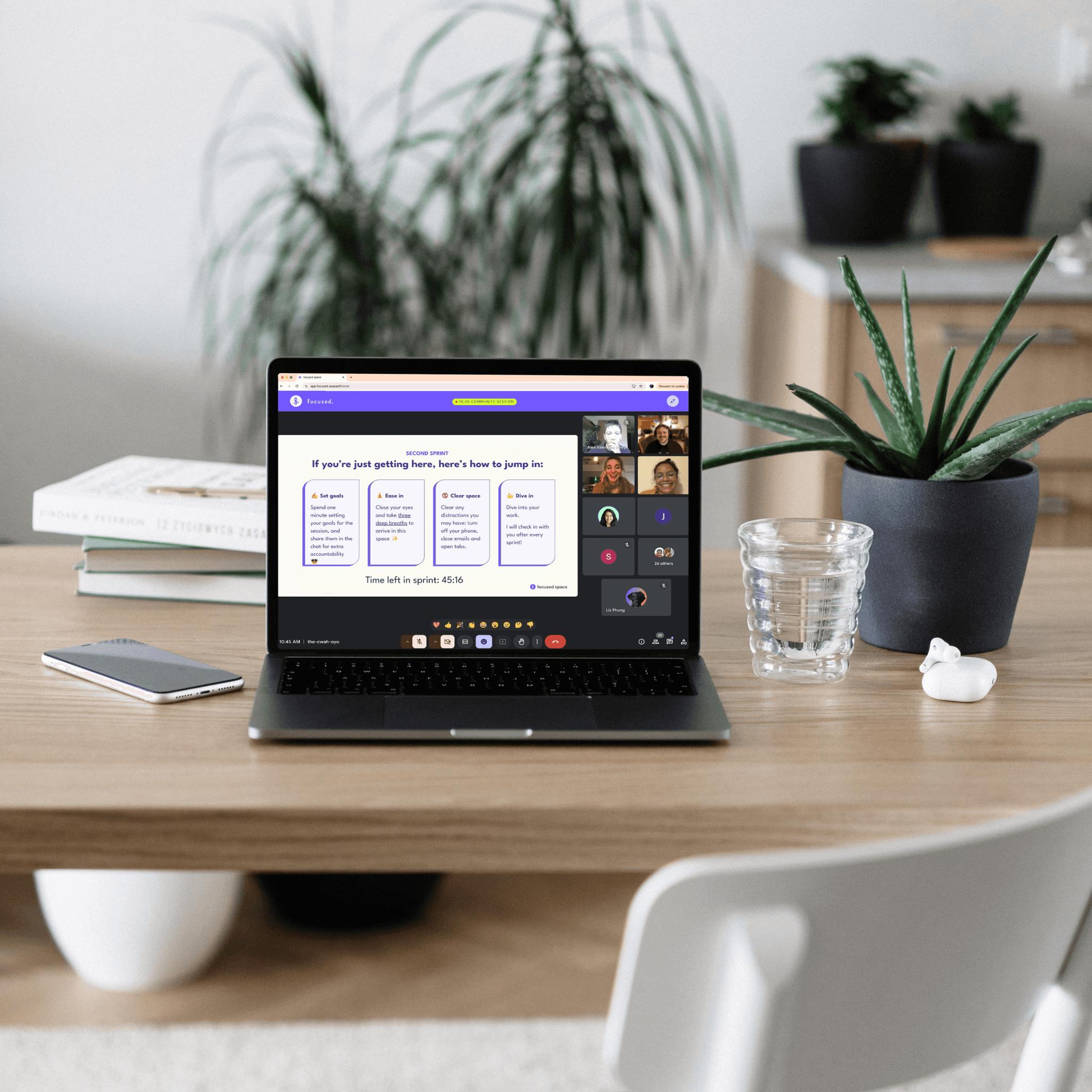
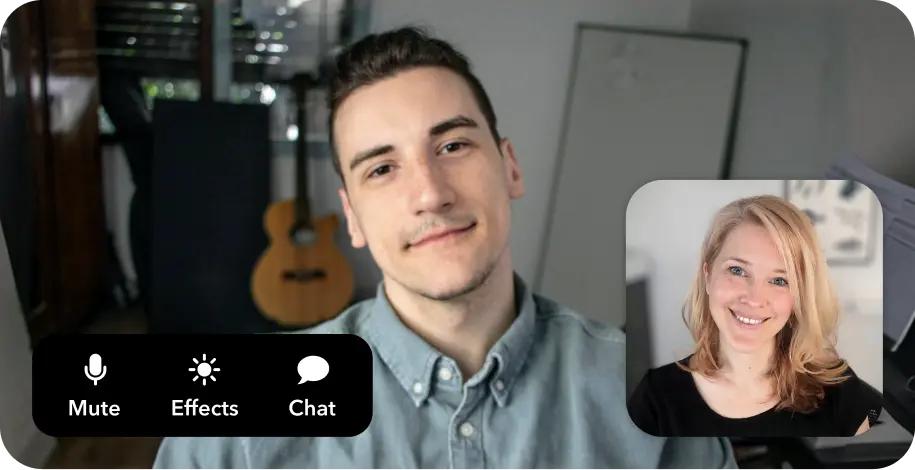
- A virtual co-working partner on a video call
- A structured online focus session with strangers
- A family member present in the same space (even doing unrelated tasks)
What does NOT count as body doubling:
- Background TV or music (passive media, no social presence signal)
- A phone call where you're talking (too high-stimulation, breaks focus)
- Working in a café alone (helpful for some, but lacks the directed presence)
The key variable is human presence with a shared "work now" context.
Body Doubling Online vs. In-Person: Is One Better?
Research on ADHD behavior and virtual presence suggests that online body doubling can be equally effective as in-person body doubling for most people.
| In-Person | Online | |
|---|---|---|
| Social presence signal | Strong | Strong (with cameras on) |
| Availability | Limited to location | Anytime, anywhere |
| Scheduling friction | High | Low |
| Consistency | Hard to maintain | Easy with apps |
| Best for | Deep familiarity, severe ADHD paralysis | Daily use, flexible work |
For most adults with ADHD, body doubling online is more practical and therefore more consistently used — which matters more than theoretical effectiveness.
How to Do Body Doubling: Step-by-Step
In-person body doubling:
- Ask someone to sit with you while you work (they can do their own thing)
- Tell them what you're going to work on
- Work in their presence for a set time
- Check in when done
Virtual body doubling:
- Open a body doubling app or video call
- State your task intention at the start of the session
- Work with cameras on, microphone muted
- Share what you accomplished at the end
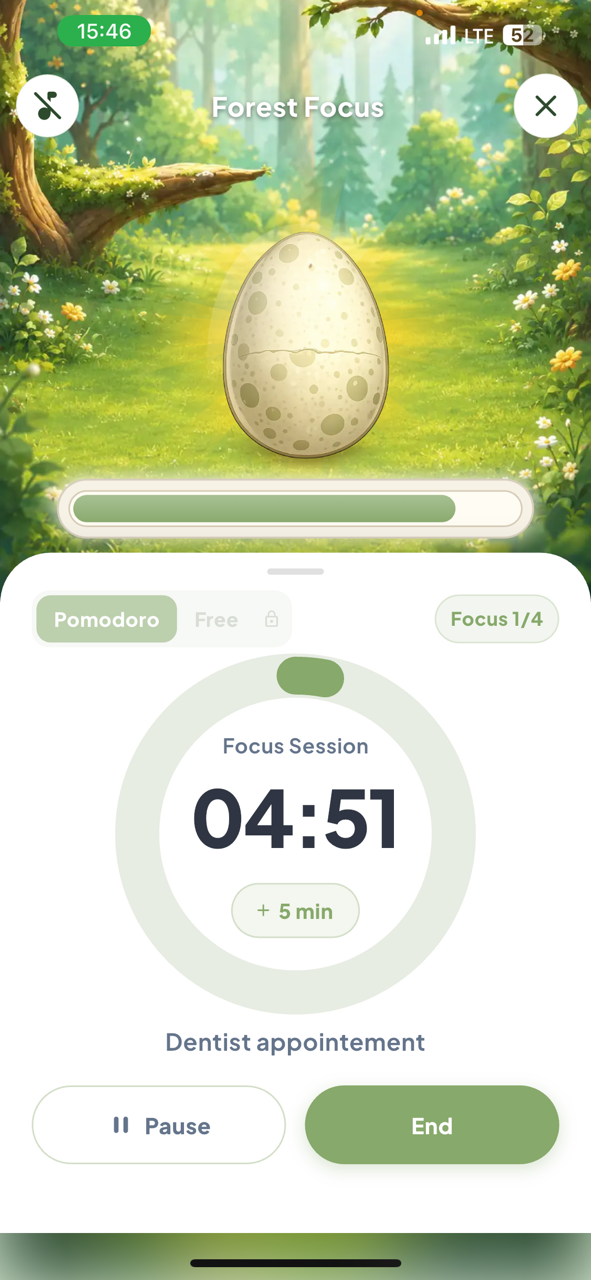
Apps designed for ADHD body doubling online: Zobud Focus offers virtual focus rooms built specifically for ADHD, with structured session check-ins, focus timers, and real-time presence — removing the friction of setting up your own virtual co-working arrangement.
Who Benefits Most from Body Doubling?
Body doubling is most effective for people who:
- Have ADHD (diagnosed or suspected)
- Struggle specifically with task initiation ("I know what to do, I just can't start")
- Work alone or from home without natural external accountability
- Find group environments helpful but structured social pressure stressful
It is less effective for people who find any social presence distracting rather than regulating — a real experience for some with ADHD, and worth testing for yourself.
Frequently Asked Questions
What is body doubling ADHD? Body doubling for ADHD is working in the presence of another person to improve focus. The other person's presence provides external accountability that helps compensate for the ADHD brain's executive function challenges.
What is the meaning of body doubling? Body doubling means using another person's presence — not their help — as a focus tool. For ADHD, it replaces the internal motivation signal the brain struggles to generate with an external social signal.
What is ADHD body doubling vs. regular co-working? Co-working is simply sharing a space. ADHD body doubling is an intentional strategy where the presence of another person is the mechanism for focus — not incidental to the work environment.
Does body doubling work for all ADHD types? Body doubling works for both ADHD-Inattentive and ADHD-Combined presentations. It is particularly effective for task initiation difficulty, which is common across all ADHD types.
Where can I find a body double online? Zobud Focus provides virtual body doubling rooms designed for ADHD. You can join a session instantly without scheduling or social obligation.
Is body doubling a real ADHD strategy or just a trend? Body doubling is a well-established ADHD strategy supported by behavioral research on external regulation in executive function disorders. It has been recommended by ADHD specialists for decades; the online format is new, but the mechanism is not.
Zobud Focus is built for exactly this — virtual body doubling rooms, ADHD-friendly session structure, and a community that understands how your brain works.